

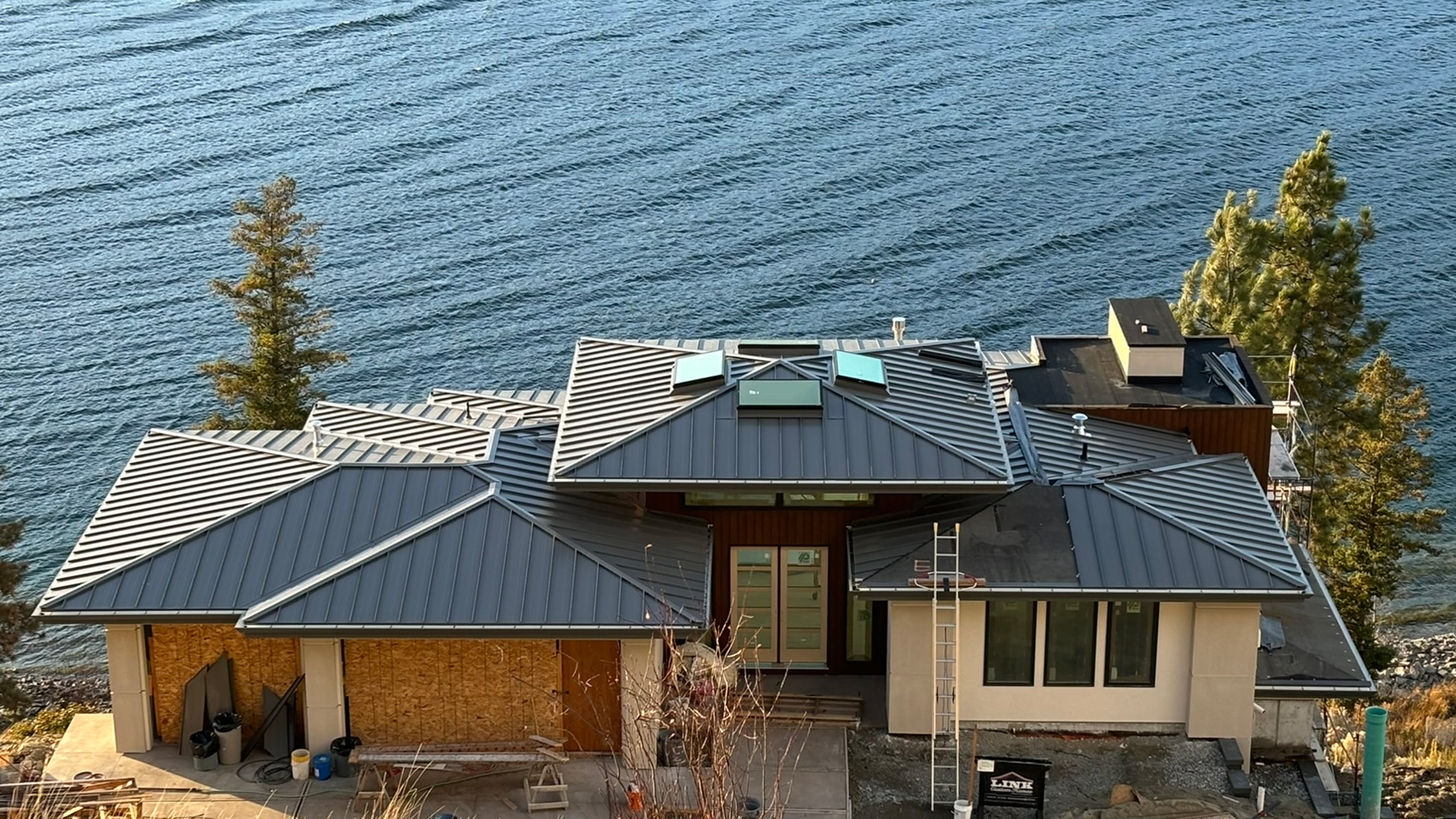
One of the most common questions I get when I quote a roof is whether I can put a metal roof over shingles and skip the tear-off. I understand why people ask. It sounds faster and cheaper. My answer is always the same: no. I always tear off the old roof first, and I never install a metal roof over an old one. Here’s my honest take on why, based on the roofs I work on in Kelowna and across the Okanagan.
Yes, Some Companies Do Overlays
To be fair, some companies will install metal straight over existing shingles, and it does cost less upfront. There’s no tear-off labour and no disposal, and the job can move faster.
Before you decide, I always look at your roof and explain the options. But I don’t do overlays myself, and I’ll tell you plainly why.
Why I Won’t Put a Metal Roof Over Shingles
In my view, going over the old roof doesn’t really save you money, it doesn’t look as good, and it raises the chance of the roof system failing or even coming loose down the road. Here’s what’s behind that.
You can’t see what’s underneath
An old shingle roof can hide a lot: soft spots, rotted sheathing, old leaks around chimneys and vents, and decking that’s no longer solid. If you cover it with metal, those problems are still there. You just can’t see them anymore, and neither can I.
What the panels are fastened to matters
My standing seam roofs use a hidden clip system. The clips hold the panels to the roof, so they need solid decking underneath to fasten into. Going through a layer of old shingles into decking nobody has looked at isn’t something I’m willing to rely on.
Flat pans show what’s under them
My profile is a 1-inch standing seam with flat pans. That’s a clean look, but a flat pan doesn’t hide much. Old shingles are rarely flat, especially once they’ve curled or been patched, and those bumps and ridges can show through the metal. That’s a big part of why an overlay just doesn’t look as good.
Moisture and the details
A new roof is a whole system: the underlayment, the flashing at walls and chimneys, the details around vents and skylights, and how the roof breathes. Leaving the old roof in place can trap moisture between layers, and it makes it much harder to get the flashings and the underlayment right. You’re building your new roof on top of the old roof’s problems.
Extra weight
An overlay leaves all the weight of the old roof on your house, with the new roof on top of it. Taking the old roof off means your structure only carries the roof you actually have.
What the standards say
In the trade, the expectation is a clean deck. For example, the Roofing Contractors Association of BC’s RoofStar standard for asphalt shingle systems says replacement roofing must go over a bare, clean and suitable deck, and doesn’t allow roofing over existing shingles. Building code requirements and how they’re interpreted can vary, so check with your local building department if you’re unsure. My own rule is simple: I start from clean decking every time.
What My Tear-Off Process Looks Like
I’m a one-man business, but tear-off is heavy work, so I bring in a crew for the tear-off, working under my direct supervision. That way I see the decking as soon as the old roof comes off.
If I find rotten or unsuitable decking, it has to be repaired before the new roof goes on. When that happens:
- I tell you right away
- I explain what it will cost and how it affects the timeline
- I wait for your approval before going ahead
No surprises on the final bill, and nothing gets covered up.
Building the New Roof from Clean Decking
Once the deck is sound, I put down a high-temperature synthetic underlayment, either Roofnado StormTread or AnchorDeck PSU. Then I install the clips, panels, flashing and trim myself.
I use 24 gauge or heavier Cascadia Metals steel, rolled into a 1-inch standing seam with flat pans, usually in 21-inch panels. You can read more about how I build these on my standing seam metal roofing page.
I give one roof my full attention at a time, so every part of it gets done properly. I’m an RCABC-trained journeyman, and I stand behind my work with a 10-year craftsmanship warranty. The panels and paint are covered separately by Cascadia Metals’ own product warranty, and I’ll tell you which product your roof uses so you know what applies.
Frequently Asked Questions
Can you put a metal roof over shingles?
Some companies do, but I don’t. I always tear off the old roof first so the new roof goes onto clean, solid decking.
Isn’t an overlay cheaper?
It costs less upfront. In my view it doesn’t really save you money once you count the risks: hidden rot, a roof that doesn’t look right, and a higher chance of the roof system failing down the road.
What happens if you find rotten decking?
I tell you right away, explain the cost and how it affects the timeline, and wait for your approval before I repair it.
Do you do the tear-off yourself?
I bring in a crew for the tear-off, working under my direct supervision. I install the new roof myself.
Thinking About a New Metal Roof?
If you’re weighing a metal roof over shingles, or a full replacement, I’d be happy to come out, look at your roof and explain your options with no pressure. Call or text me directly at 250-503-7577, or get in touch here.

